From grey to green: European cities team up to fight heat stress

30 April 2026 by
Rebecca Grossberg


On 12 March 2026, the Interreg North-West Europe Cool Neighbourhoods and Interreg North Sea Cool Cities projects came together for a joint midterm event in Middleburg, bringing together 130 participants to explore ways to tackle rising urban temperatures.

Featured image: Keynote presentation by Tim van Hattum, climate expert from Wageningen University & Research, reminding the urgency of the climate and biodiversity crisis and how to impart a narrative of hope instead of doom.
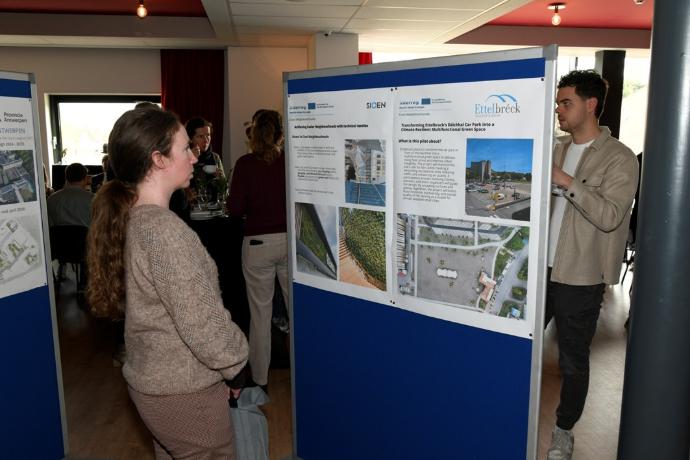
Observation of the Ettelbruck, Luxemburg Green Hub Pilot Poster

Stronger together: synergies across programmes


What do Middleburg (NL), Gothenburg (SE) and Ettlebruck (LU) have in common? They are all fighting urban heat stress with the support of Interreg funding. For Cool Neighbourhoods and Cool Cities, the approaches may be different, but the goal is the same: prepare Europe’s cities for an ever-warmer climate by mitigation and adaptation of green infrastructure in cities. This is the first time that the two Interreg programmes work together in such a concrete way, showcasing complementarities between the North-West Europe and North Sea regions. Together, the projects create an extensive network of 24 partners from across 7 countries.


How do synergies contribute to project success? By working together, projects reach a wider audience, enabling shared visibility, resulting in wider policy and territorial impact as the projects can pool resources and knowledge. This was highlighted during the site visits in Middleburg where participants visited two pilot sites making climate resilient and heatproof cities.


The event began and ended with project partner meetings which allowed each project to reflect on their own approach to heat stress and how to cool Europe’s cities.

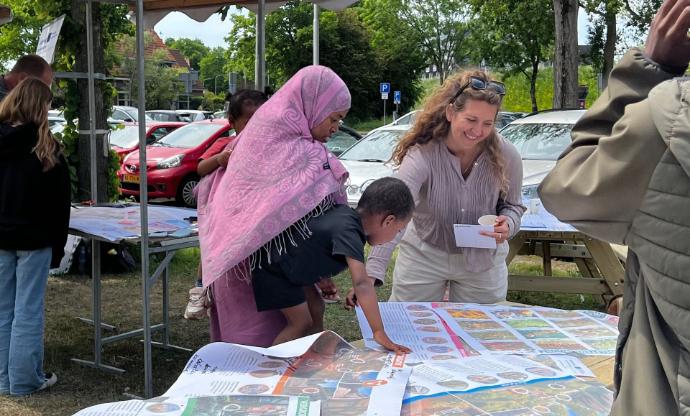
Co-creation in action at an event in Middelburg, Netherlands
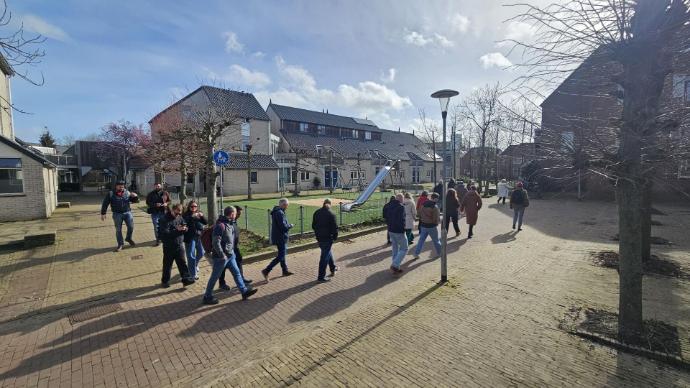
Before image of a playground in the Edelstenenbuurt neighbourhood in Middelburg

Cathedral thinking: building long-term hope and resilience

“Expert founded optimism”, according to Tim van Hattum from Wageningen University & Research, is the only way to approach climate challenges. He emphasised that we have the means to keep the climate under control through incremental adaptations. Looking towards the future with optimism to find solutions for a long-term strategy is especially important after a decade of missed opportunities. He stressed that: “we need a narrative of hope to make immediate change but also to inspire future generations”.


For Cool Neighbourhoods, this means targeting the most vulnerable citizens in the most vulnerable neighbourhoods. Not surprisingly, these citizens live in areas most affected by heat stress.

Tackling heat stress in the most vulnerable neighbourhoods

While Cool Cities looks at heat stress from a top-down approach, Cool Neighbourhoods is approaching the issue from a citizen-centric, bottom-up approach. This can be challenging in a transnational project, as some countries may be more used to top-down ways of working. But it is exactly what makes transnational cooperation so valuable. As Tiny Manhout, Lead Partner of the Cool Neighbourhoods project explains, working together, inspiring one another, and learning from each other’s experiences are key benefits of such collaboration.


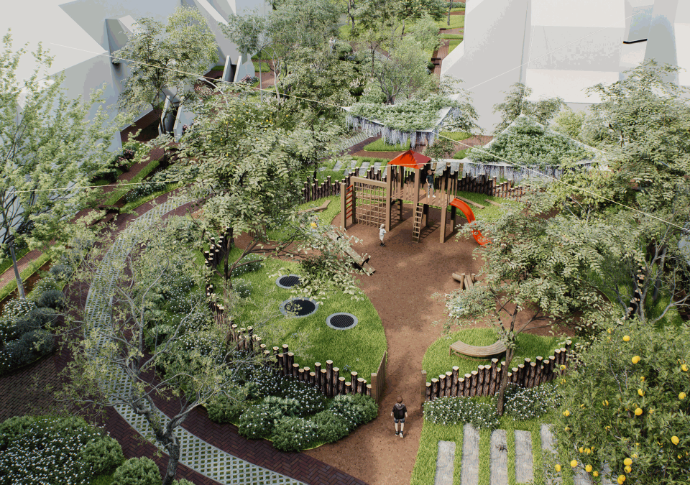
In the Edelstenenbuurt neighbourhood of Middleburg, urban sustainability expert Emma Westerduin met with citizens and defined a neighbourhood plan in a co-creation process that will help make the neighbourhood a more attractive, cooler, and greener place to live. Currently, the neighbourhood is completely paved, with little to no green area and no shading or cooling features, making the citizens vulnerable to heat exposure. The proposed project will not only plant trees and make the area more liveable but will reuse the paving stones for a more sustainable renovation approach.

Image: After image of a playground in the Edelstenenbuurt neighbourhood in Middelburg

Image: The poster gallery gave occasion to learn more about the Cool Cities and Cool Neighbourhoods pilot locations, such as the Luxemburg Green Hub in Ettelbreck.

Image: Co-creation in action at an event in Middelburg, Netherlands

Images: Before and after images of a playground in the Edelstenenbuurt neighbourhood in Middelburg

Image 1: The poster gallery gave occasion to learn more about the Cool Cities and Cool Neighbourhoods pilot locations, such as the Luxemburg Green Hub in Ettelbreck.


Image 2: Co-creation in action at an event in Middelburg, Netherlands

Images 3 & 4: Before and after images of a playground in the Edelstenenbuurt neighbourhood in Middelburg


Spotlight on Cool Neighbourhoods: the Edelstenenbuurt pilot and beyond


The Edelstenenbuurt pilot in Middleburg is only one of nine pilot sites spread across seven European cities, each dealing with a different aspect of urban heat stress and affecting different vulnerable populations. The variety of pilot sites lets partners exchange on best practices and approaches in a transnational environment.


Learn more about Cool Neighbourhoods on the project website: coolneighbourhoods.nweurope.eu


Key figures: 

  • 13 partners
  • 4 countries: Belgium, France, Luxembourg & the Netherlands
  • Cooperating from 2024 to 2027
  • Budget: €9.3 M

Take a look at some of the 'before' pictures of the EU cities involved in the project: